

Introduction: A “Return to Real Estate” Moment
After several years of volatility driven by inflation, rapid interest-rate hikes, and geopolitical instability, 2025 marks a pivotal shift in the global real estate landscape. Institutional investors—once cautious and overweight in cash, bonds, and defensive equities—are again allocating significant capital toward real estate. Unlike the pre-2020 era, however, this resurgence is not driven by traditional office towers or speculative residential projects. Instead, the momentum is anchored in AI data centers, energy infrastructure, logistics hubs, urban redevelopment districts, and sustainability-linked assets.
This article explores the economic, technological, and policy forces driving capital back into real estate, while outlining where opportunities—and risks—are emerging across the United States, Europe, and Asia.
1. A Stabilizing Macro Environment Is Reopening the Capital Pipeline
Interest Rates Begin Returning to Normalcy
The global rate-hike cycle that defined 2022–2024 pushed financing costs to multi-decade highs, freezing transactions and devaluing aging assets. In late 2024 and early 2025, however, the U.S. Federal Reserve, the Bank of England, and the ECB all signaled a gradual easing trajectory.
Lower borrowing costs have:
reignited investment committee approvals,
improved debt-service ratios,
unlocked previously stalled acquisitions, and
revived investor confidence in long-term real estate underwriting.
Flight to Real Assets
Persistent inflation has strengthened the argument for hard assets. Land, strategic infrastructure, and energy-linked real estate are again seen as inflation-hedging vehicles, especially compared to volatile equities.
Institutional investors—ranging from U.S. pension funds to Middle Eastern sovereign wealth funds—have already begun rotating capital back toward real estate as part of a multi-year stabilization cycle.
2. AI Data Centers Have Become a Global Core Asset Class
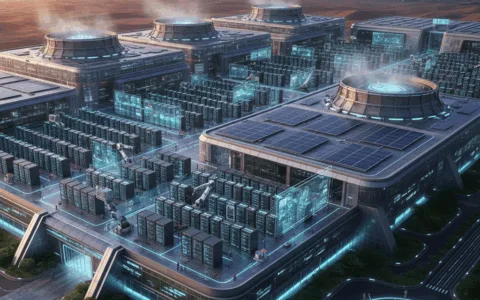
The AI Computation Boom
The explosion of artificial intelligence across sectors has triggered unprecedented demand for hyperscale and edge data centers, particularly those capable of supporting 300–1,000 MW campuses.
This shift is driven by:
Large language models (LLMs) requiring exponentially greater compute,
Rapid growth in cloud services,
Geopolitical pressures to localize data processing,
Corporations transitioning to AI-native workflows.
Why Investors Are Flooding Into Data Centers
Real estate funds, infrastructure players, and private equity firms are aggressively pursuing data-center-linked opportunities because these assets offer:
Long-term leases with AAA-credit tenants (AWS, Google, Microsoft, Oracle)
Mission-critical infrastructure with minimal vacancy risk
High barriers to entry (power, cooling, zoning, fiber connectivity)
Attractive yields compared to offices and retail
Data centers are no longer a niche asset. In 2025, they represent the fastest-growing allocation category in global property portfolios.
The Power Challenge
The biggest limitation is electricity. Major markets such as Virginia, London, Frankfurt, Singapore, Seoul, and Tokyo are running out of available grid capacity.
This constraint is accelerating:
SMR-linked data center planning,
On-site hydrogen and battery storage systems,
Regional expansion into second-tier markets with abundant land and power.
3. Urban Redevelopment: A Second Wave of City Transformation
Post-Pandemic Structural Shifts
Many global cities continue facing:
declining office utilization,
aging commercial corridors,
housing shortages, and
outdated industrial land.
Governments are now pushing large-scale redevelopment programs to adapt their cities to new demographic and technological realities.
Key International Examples
United States (New York, Boston, Chicago):
Adaptive reuse of obsolete offices into housing and life-science facilities.United Kingdom (London):
Strategic intensification of old retail corridors; mixed-use regeneration aligned with Net Zero policies.Italy (Milan, Rome):
Transit-oriented redevelopment and cultural district investments.South Korea (Seoul, Busan, Incheon):
Large-scale urban restructuring through mixed-use megaprojects, digital infrastructure zones, and aging-housing renewal.
These redevelopment zones are attracting global capital because they combine public-sector incentives, long-term leases, and strategic urban land.
4. ESG, Energy Transition, and “Green Premium” Economics
The Rise of Sustainability-Linked Valuations
Global investors increasingly differentiate between:
Green-certified, energy-efficient buildings
Aging, high-emission “brown” buildings
This trend is quantifiable. A growing number of Western and Asian cities have introduced:
carbon assessments,
mandatory performance disclosures,
penalties for inefficient buildings, and
incentives for retrofits.
As a result, ESG compliance has become a direct driver of asset valuation.
The New Winners: Clean Energy + Real Estate
Investment capital is flowing into:
buildings powered by renewable energy,
campuses designed for low-carbon operations,
ESG-certified logistics and industrial assets.
Furthermore, SMR and advanced nuclear projects in the U.S., U.K., and South Korea are expected to reshape industrial real estate and data center markets by providing stable, clean baseload power.
5. Asia-Pacific: A New Center of Gravity for Real Estate Capital
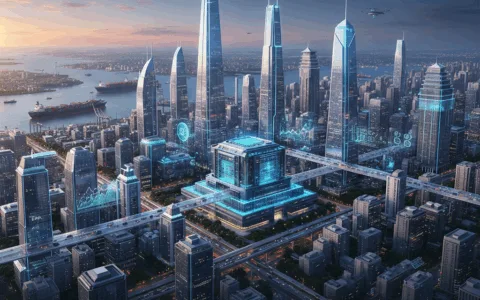
Korea, Japan, Singapore Leading the Surge
Asia-Pacific is experiencing powerful demand from domestic and foreign investors thanks to:
stable financial systems,
strong logistics markets,
data center expansion capacity,
long-term urban redevelopment opportunities,
attractive land banking prospects.
South Korea in particular is emerging as a strategic hub for:
AI infrastructure campuses,
high-end mixed-use developments,
ESG-driven office and industrial retrofits,
global retail and lifestyle complexes in exurban zones.
Global Funds Intensify Their APAC Focus
U.S. and Middle Eastern funds are increasing allocations to Korea and Japan due to currency advantages and consistent policy environments.
6. Where the Capital Is Flowing: 2025–2030 Outlook
Top 6 Investment Themes
AI Data Centers & Digital Infrastructure
Urban Regeneration Mega-Districts
Industrial & Logistics Networks
Energy Infrastructure Real Estate (including SMRs)
Mixed-Use Redevelopment linked to Housing Reform
Land Banking in Strategic Growth Corridors
Risk Factors to Watch
power shortages and infrastructure constraints,
construction inflation,
regulatory uncertainties in rezoning,
geopolitical disruptions,
rising insurance costs in climate-exposed regions.
Yet, even with these risks, global capital believes the next five years present a rare alignment of yield, stability, and long-term growth in real estate—especially compared to volatile equities and declining bond yields.
Conclusion: Real Estate Is Entering a New Structural Cycle
Real estate in 2025 is no longer a passive, slow-moving asset class. It sits at the intersection of AI, energy, logistics, urban planning, and environmental policy. As these sectors converge, global capital is strategically reentering the market—seeking assets that are essential, resilient, and aligned with the future of urban and digital economies.
This new wave of investment will shape cities, infrastructure, and economic competitiveness for decades to come.
*Link : https://www.sjglobal.site/ks8v

