
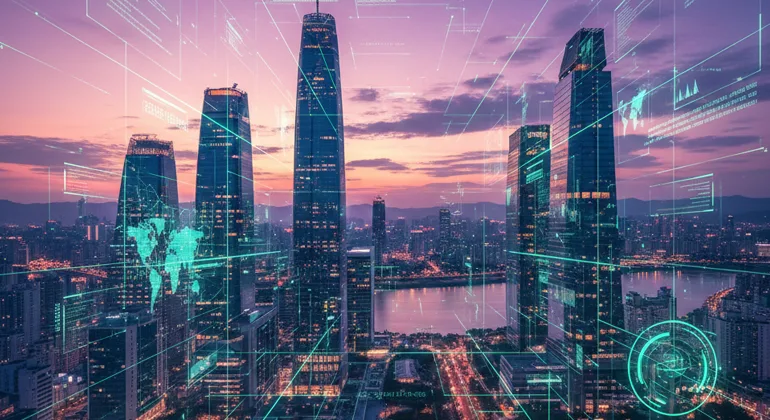
The Race for AI Infrastructure Supremacy
The global artificial intelligence revolution has reached a critical juncture. As AI models grow exponentially in complexity and capability, the infrastructure supporting them has become as strategically important as the algorithms themselves. While the United States and China dominate headlines with massive investments in AI research, a crucial question remains largely unexamined: where should the physical infrastructure powering this technology revolution be built?
The answer may lie in an unexpected location—and recent developments suggest the urgency of finding it. Across the United States, a growing number of states are pushing back against proposals for large-scale AI data centers. From Iowa to Virginia, local communities and state governments are raising concerns about the massive energy consumption these facilities demand. The primary flashpoint? Electricity rates.
When a single AI data center can consume as much power as a mid-sized city, the impact on local electricity grids is profound. Residents fear skyrocketing utility bills as power companies pass infrastructure upgrade costs onto consumers. In some states, regulators have begun rejecting or delaying data center projects after public outcry over projected rate increases. This resistance represents more than local NIMBY sentiment; it reveals a fundamental infrastructure challenge that wealthy Western nations are struggling to solve.
The pattern extends beyond American borders. European countries face similar tensions as they attempt to balance climate commitments with the energy-intensive demands of AI infrastructure. Nations that once competed eagerly for data center investment now find themselves caught between economic opportunity and constituent backlash over energy costs and environmental impact.
Yet one nation has quietly positioned itself to sidestep these conflicts entirely. South Korea, a country roughly the size of Indiana, possesses a unique combination of advantages that address the very concerns paralyzing data center development elsewhere. This isn’t merely about available land or cheap electricity. It’s about a convergence of technological maturity, energy infrastructure sophistication, geopolitical stability, and forward-thinking policy that few nations can match—and that becomes more valuable as other locations become increasingly problematic.
The case for South Korea becomes clearer when examining the specific demands of modern AI infrastructure. These facilities require not just massive computational power, but also unprecedented levels of energy efficiency, network connectivity, and cooling capacity. They need political stability, skilled technical workforces, and proximity to both markets and innovation centers. Most critically, they require a level of digital infrastructure sophistication that takes decades to develop.
South Korea checks every box.
A Digital Infrastructure Built for Tomorrow
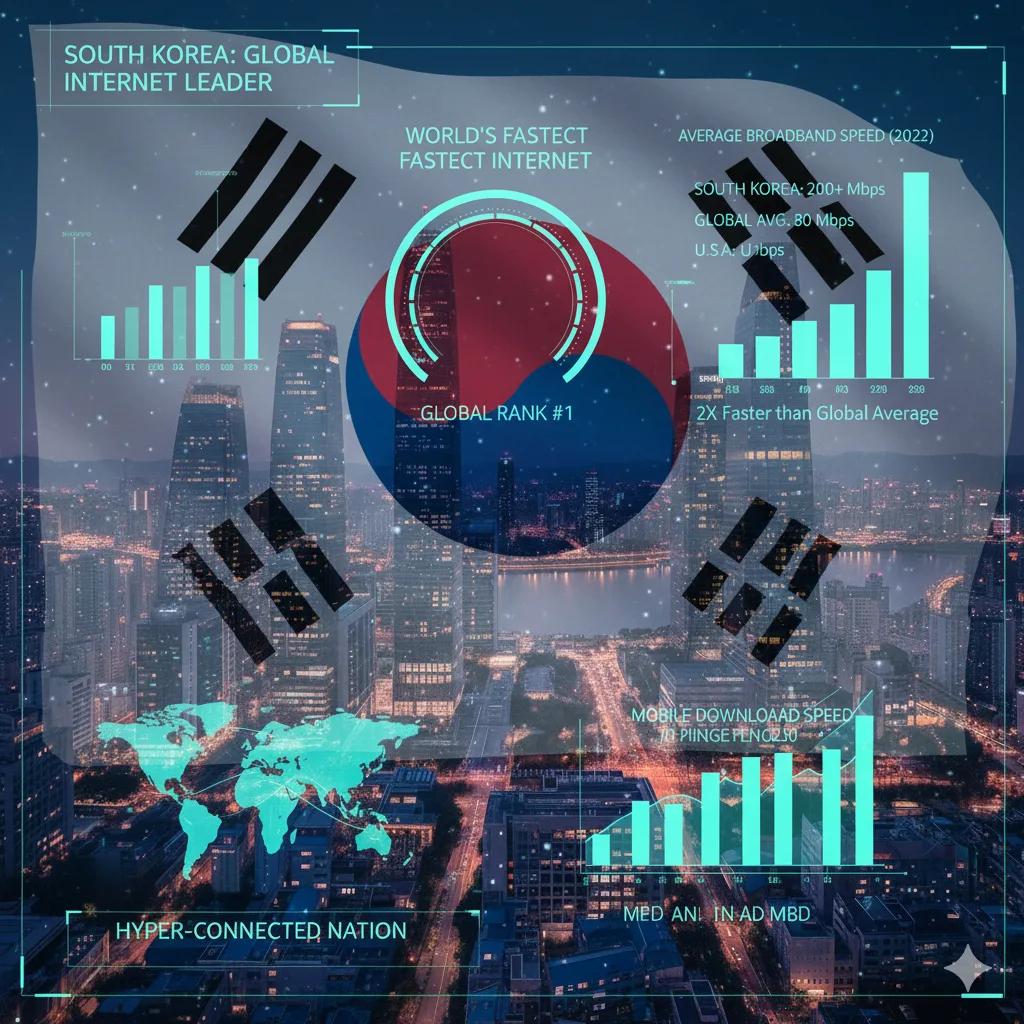
While Seoul often claims headlines for having the world’s fastest average internet speed, this statistic misses a crucial point: South Korea’s digital infrastructure excellence isn’t confined to its capital. Ultra-high-speed fiber optic networks blanket the entire nation, from major metropolitan areas to rural provinces. The nation has spent three decades building a technological foundation that now seems prescient in the age of AI.
The country’s fiber-optic network penetration exceeds 95 percent across all regions, a figure that makes even wealthy European nations look underdeveloped. This nationwide infrastructure uniformity creates a strategic advantage that directly addresses the community resistance plaguing data center development in the United States and Europe. While American and European projects concentrate in already-saturated tech hubs—triggering local opposition over electricity rates and resource strain—South Korea offers a different path.
Regional areas outside Seoul often welcome data center investment enthusiastically, viewing these facilities as economic catalysts rather than burdens. These communities understand that data centers bring high-skilled jobs, tax revenue, and infrastructure improvements without the quality-of-life disruptions that concern residents in crowded urban centers. The combination of world-class digital infrastructure in these receptive regions and strong community support creates an ideal scenario. Companies can build large-scale facilities where land costs are lower, cooling requirements are reduced, and local governments actively facilitate development—all while maintaining connectivity and performance that rivals any location in Seoul.
The scale of this regional opportunity became evident in 2024 when SK Group successfully attracted Amazon Web Services to Ulsan for a massive data center project valued at approximately 7 trillion won (roughly $5.3 billion). While the exact terms remain confidential, industry analysts widely believe AWS secured exceptionally favorable conditions—including significant tax incentives, expedited permitting processes, preferential electricity rates, and substantial infrastructure support from both the local government and SK’s existing industrial ecosystem.
What makes this development particularly significant for prospective AI data center developers isn’t just the Ulsan deal itself, but what it has triggered across Korea. The AWS announcement ignited intense competition among regional governments eager to capture similar investments. Multiple local authorities have since approached the market with incentive packages that reportedly exceed what Ulsan offered—more aggressive tax benefits, enhanced infrastructure commitments, streamlined regulatory pathways, and creative public-private partnership structures designed specifically for AI infrastructure.
This competitive dynamic among Korean regional governments creates unprecedented opportunities for international AI companies. Unlike markets where data center developers must navigate community opposition and negotiate grudging acceptance, Korea presents a landscape where local authorities actively compete to offer the most attractive terms. Provincial governments understand that landing a major AI data center project brings transformative economic impact—not just construction jobs and ongoing operations employment, but the entire ecosystem of suppliers, service providers, and secondary industries that cluster around such facilities.
The Ulsan precedent demonstrates another crucial advantage: the ability to integrate data center development with existing industrial infrastructure. SK’s industrial complex in Ulsan provided immediate access to power substations, cooling water systems, and logistics networks that would take years and billions to develop from scratch elsewhere. Similar opportunities exist in other Korean industrial regions, where decades of heavy industry investment have created infrastructure assets that can be repurposed or shared with AI data centers at a fraction of greenfield development costs.
This isn’t just about consumer internet. The backbone infrastructure connecting these regional areas to major cities, research institutions, and industrial centers represents billions of dollars in investment that has already been made and optimized.
Consider the practical implications. Training a large language model requires constant data transfer between thousands of GPUs. Network latency, even measured in milliseconds, compounds into massive efficiency losses when scaled across weeks of continuous computation. South Korea’s domestic network architecture minimizes these inefficiencies in ways that would require decades and tens of billions of dollars to replicate elsewhere.
The nation’s 5G infrastructure provides another layer of advantage. South Korea achieved near-universal 5G coverage years before most developed nations, creating an ecosystem where edge computing and real-time AI applications can be tested and deployed at scale. For companies developing AI products, this means the ability to iterate and refine applications in a market that represents the future most other countries are still building toward.
Moreover, the integration between South Korea’s telecommunications infrastructure and its data center ecosystem is remarkably mature. The country’s major telecommunications providers have decades of experience managing the complex interplay between network capacity, data storage, and computational resources. This operational expertise becomes invaluable when scaling AI infrastructure, where the margin between profitable operation and expensive failure often lies in optimization details that only experience can teach.
Energy Innovation Meeting AI’s Insatiable Appetite
The energy requirements of AI data centers have become staggering. Training GPT-4 reportedly consumed enough electricity to power thousands of homes for a year. As models grow larger and more capable, their energy demands multiply. This reality has transformed energy infrastructure from a mundane operational concern into a strategic competitive advantage.
South Korea’s approach to energy provides a compelling answer to this challenge. The nation generates approximately 30 percent of its electricity from nuclear power, providing a stable, carbon-neutral baseload that renewables alone cannot match. This matters enormously for AI data centers, which require constant, reliable power without the intermittency challenges that plague solar and wind energy.
The country’s advanced nuclear fleet includes some of the world’s newest and most efficient reactors. Korean firms like KEPCO have pioneered innovations in nuclear operations and safety, creating a template for reliable, large-scale power generation. For AI companies concerned about both energy costs and environmental impact, this nuclear foundation offers a rare combination of sustainability and dependability.
But South Korea isn’t resting on nuclear power alone. The nation has aggressively invested in renewable energy integration, developing sophisticated grid management systems that balance nuclear baseload with growing solar and wind capacity. This hybrid approach provides both the constant power AI requires and the environmental credentials that major technology companies increasingly demand.
The government’s commitment to energy innovation extends to direct support for data center development. Recent policy initiatives include preferential electricity rates for high-tech industrial users and streamlined approval processes for data center construction. These aren’t merely symbolic gestures. They represent a national strategy to position South Korea as the infrastructure backbone for the AI economy.
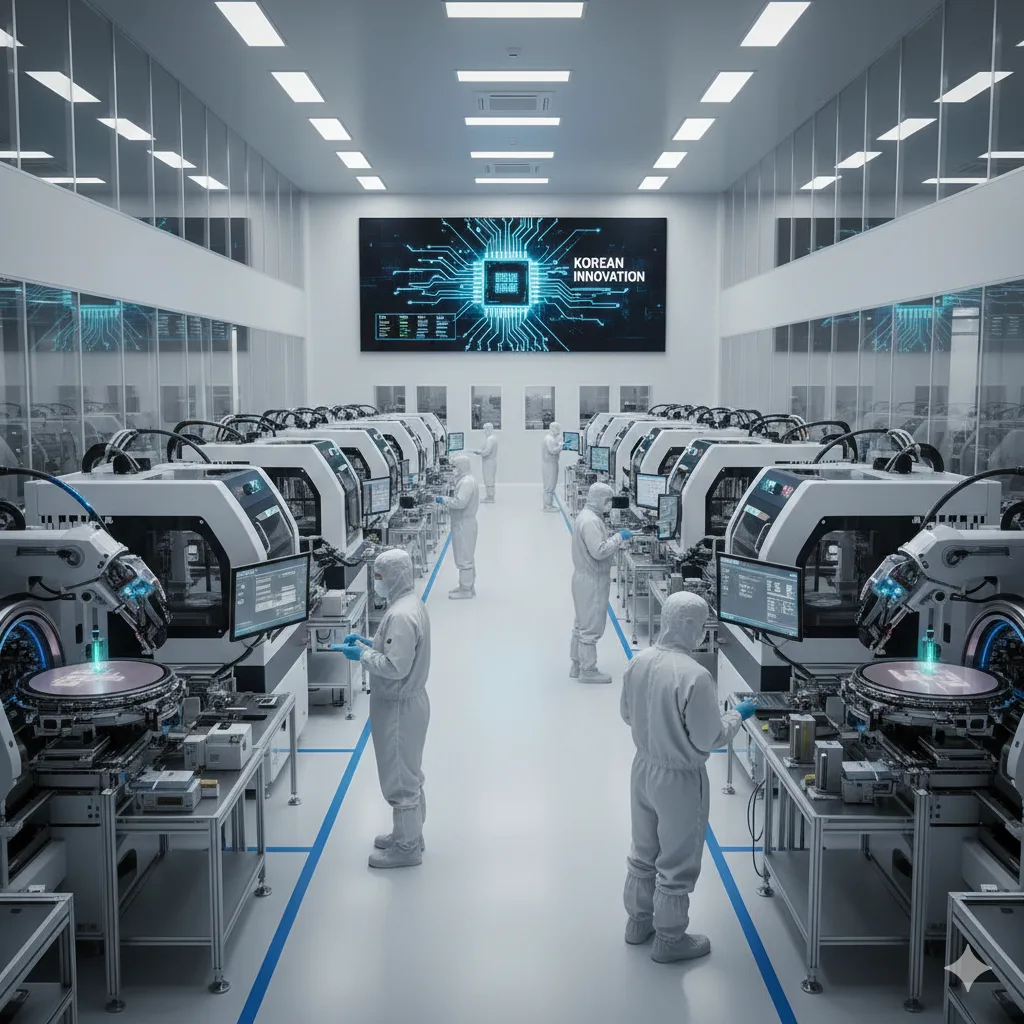
Perhaps most importantly, South Korea has extensive experience managing high energy-density industrial operations. The nation’s semiconductor manufacturing sector, which includes Samsung and SK Hynix, operates some of the world’s most energy-intensive facilities. The expertise developed in powering and cooling these operations translates directly to the challenges of AI data center management.
Geographic Strategy in an AI-Powered World
Location matters more in the age of AI than many technologists acknowledge. While cloud computing has been sold on the promise of location independence, the physics of data transmission and the realities of geopolitics tell a different story.
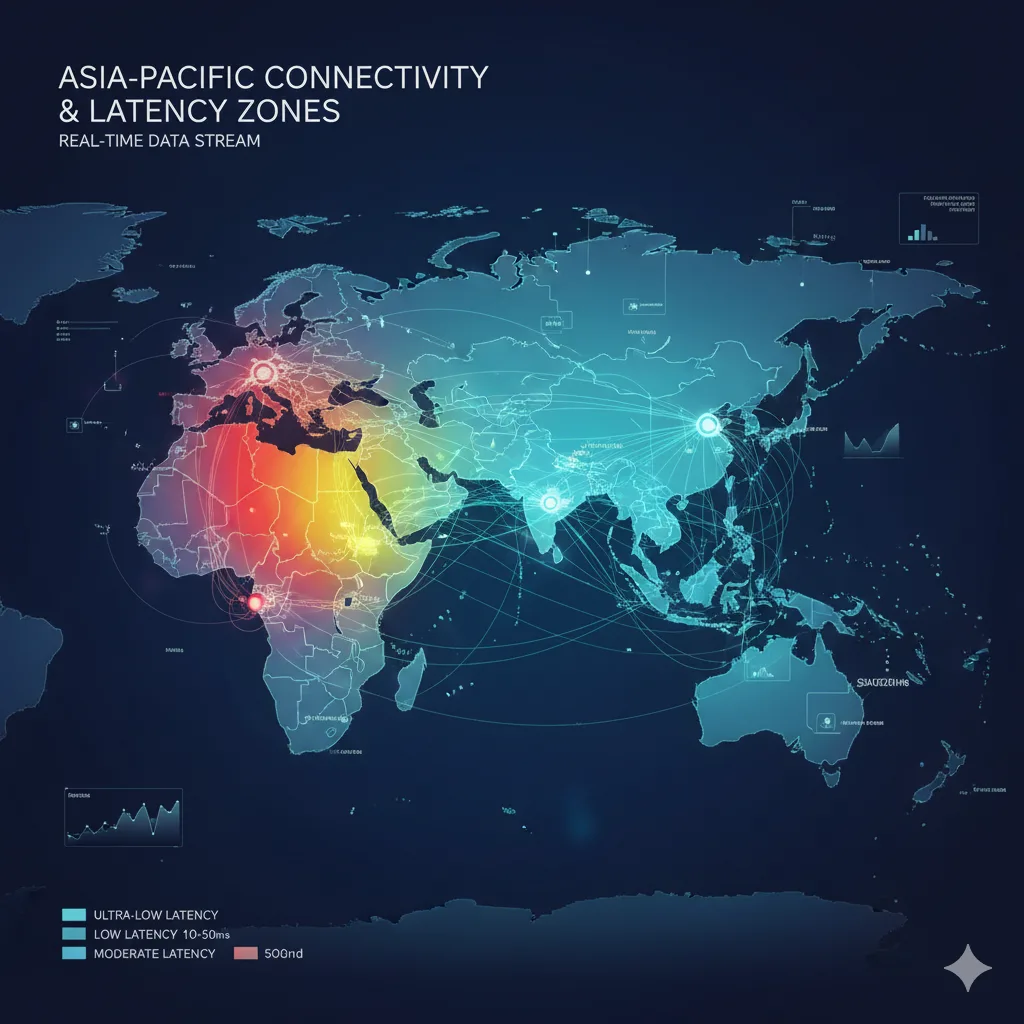
South Korea sits at the center of the world’s most dynamic economic region. It lies within minimal network latency of Japan, Taiwan, and major Chinese cities. Singapore and other Southeast Asian hubs are readily accessible. This positioning isn’t just convenient; it’s strategically vital.
The Asia-Pacific region represents the fastest-growing market for AI applications. As artificial intelligence moves from research labs into practical commercial deployment, proximity to these markets provides measurable advantages. Lower latency means better user experiences for real-time AI applications. Closer physical proximity reduces the regulatory complexity and data sovereignty concerns that increasingly complicate cross-border data flows.
Consider the specific case of autonomous vehicles and robotics, two sectors where AI application is accelerating rapidly. Both require real-time processing with minimal latency. South Korea’s automotive industry, led by Hyundai and Kia, is investing heavily in autonomous technology. The country’s advanced manufacturing sector is pioneering AI-powered robotics. Having AI computational infrastructure located domestically provides these industries with competitive advantages that offshore data centers cannot match.
The geopolitical dimension adds another layer of strategic value. In an era of increasing technological nationalism and concerns about data sovereignty, South Korea occupies a unique middle position. It maintains strong alliances with the United States and other Western democracies while maintaining pragmatic economic relationships across Asia. This balanced positioning makes it a more neutral location for international AI infrastructure than facilities in either the United States or China, which increasingly face geopolitical restrictions on data flows and technological cooperation.
South Korea’s participation in international technology standards bodies and trade agreements further enhances this advantage. The country has demonstrated a consistent ability to navigate complex international technology regulations while maintaining open digital borders. For multinational corporations seeking to serve diverse markets, this regulatory sophistication reduces risk and complexity.
The Talent Pipeline That Powers Innovation
AI data centers aren’t just warehouses filled with servers. They’re complex operations requiring constant innovation in cooling systems, power management, network architecture, and computational optimization. Success depends on having access to deep pools of technical talent across multiple disciplines.
South Korea’s education system produces engineers at a rate that far exceeds most developed nations. The country ranks near the top in international mathematics and science assessments, and its universities graduate tens of thousands of computer science and electrical engineering students annually. This isn’t just quantity; Korean technical education emphasizes practical skills and industry collaboration in ways that produce job-ready graduates.
The nation’s semiconductor industry provides another crucial talent advantage. Samsung, SK Hynix, and their vast network of suppliers employ hundreds of thousands of engineers with expertise directly applicable to AI infrastructure. These professionals understand chip architecture, thermal management, power systems, and manufacturing precision at levels that take years to develop. As AI increasingly depends on custom chip designs and specialized hardware, this knowledge base becomes invaluable.
Moreover, South Korea’s gaming and digital entertainment industries have created deep expertise in managing large-scale online systems. Companies like NCsoft and Netmarble operate massive multiplayer platforms that require sophisticated approaches to distributed computing, real-time processing, and infrastructure optimization. These skills translate remarkably well to the challenges of AI data center operations.
The country’s culture of technical excellence and continuous improvement, often associated with its manufacturing prowess, extends fully into the digital realm. Korean engineers aren’t just competent; they’re driven by a national culture that celebrates technical achievement and innovation. This intangible quality, difficult to quantify but easy to observe, creates an environment where operational excellence becomes the norm rather than the exception.
Building the Future, Now
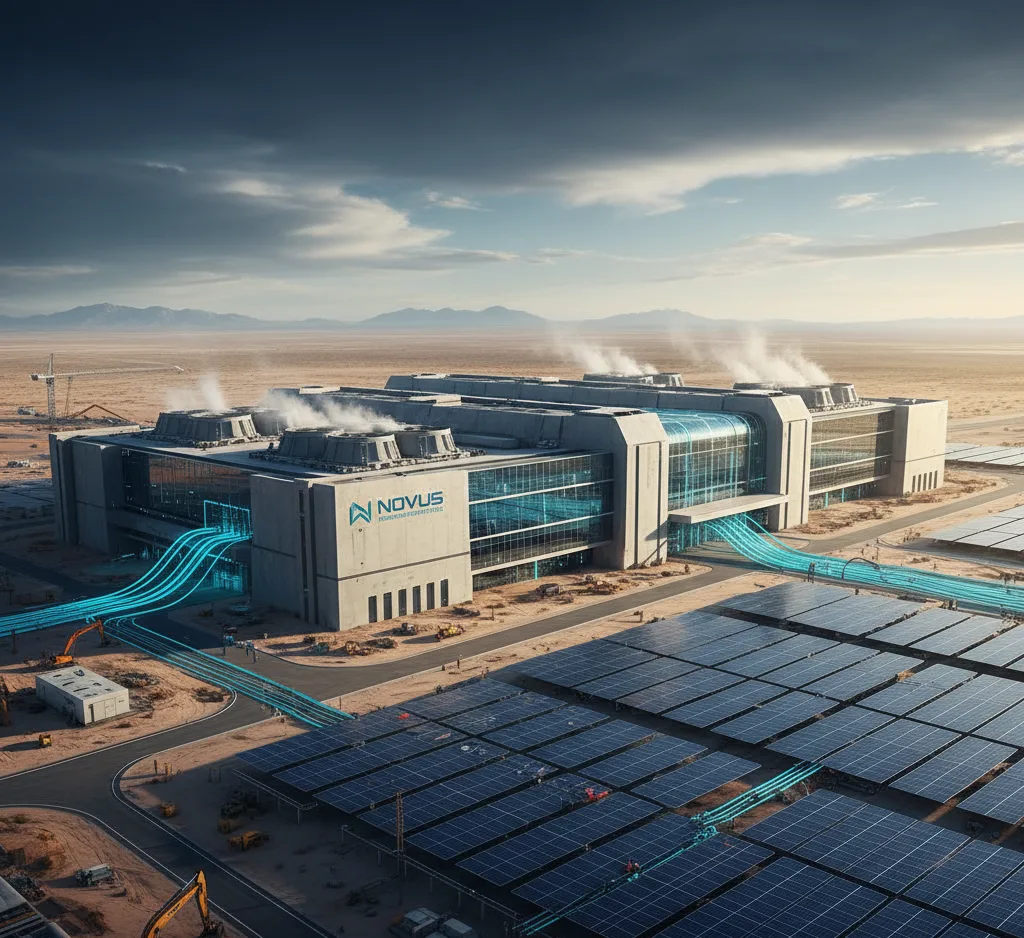
The window for establishing AI infrastructure leadership is narrower than many realize. The massive capital investments required for large-scale data centers create significant barriers to entry. Early movers gain advantages in talent acquisition, supply chain relationships, and operational learning that compound over time.
South Korea recognizes this urgency. The government has designated AI and data center development as strategic national priorities, with concrete policy support and financial incentives. This isn’t empty rhetoric; it’s backed by decades of successful industrial policy that transformed the nation from post-war poverty to technological leadership in semiconductors, displays, batteries, and telecommunications.
The economic logic is compelling. AI data centers represent stable, long-term infrastructure assets that generate sustained economic activity. They create high-skilled jobs, attract additional technology investment, and position nations to capture value from the broader AI economy. For South Korea, which has sometimes struggled to move beyond manufacturing into higher-value digital services, AI infrastructure offers a path to the next level of economic development.
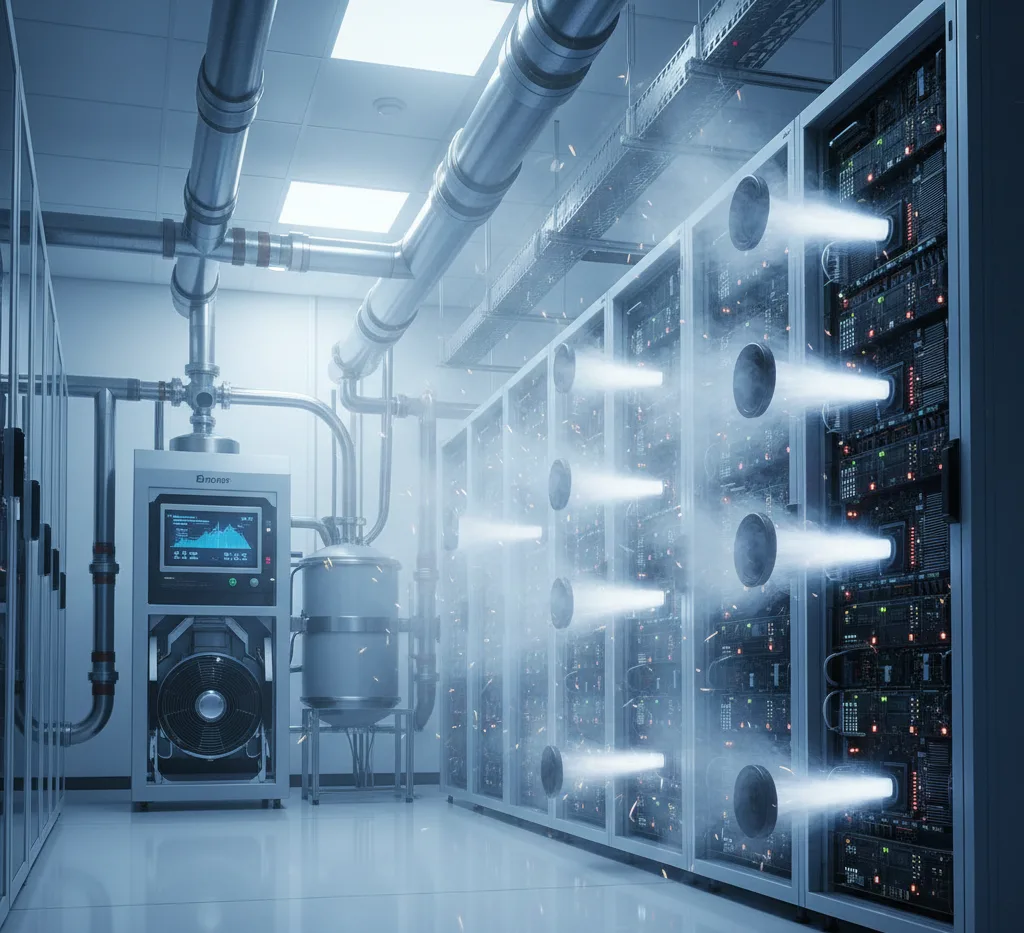
The environmental dimension strengthens the case further. South Korea’s advanced cooling technologies, developed for its semiconductor and manufacturing sectors, can make AI data centers significantly more energy-efficient than those in warmer climates or less technologically sophisticated locations. Combined with the country’s low-carbon electricity grid, this creates genuine opportunities for sustainable AI infrastructure at a time when the technology sector faces increasing scrutiny over its environmental impact.
Perhaps most compelling is the demonstration effect. If South Korea successfully positions itself as the premier location for AI data center infrastructure, it validates the country’s broader vision of becoming a global technology hub. This success attracts additional investment across the AI value chain, from chip design to application development, creating a virtuous cycle of innovation and economic growth.
The choice of where to build AI infrastructure may seem like a technical decision, but it carries profound strategic implications. As artificial intelligence reshapes the global economy, the nations that host its physical infrastructure will capture disproportionate economic and strategic advantages.
South Korea’s combination of advanced digital infrastructure, sophisticated energy systems, strategic geographic positioning, and deep technical talent makes it not just a viable location for large-scale AI data centers, but the optimal one. The question isn’t whether South Korea can support this infrastructure. It’s whether the global AI industry will recognize this opportunity before the window closes.
The future of artificial intelligence won’t be built in a single country, but the infrastructure that powers it will concentrate in locations with the foresight and capability to support it. South Korea has both. The only question is whether decision-makers will act on this reality before competitors do.
Partner with Experts Who Understand the Korean Advantage
At Seokjeong Global, we don’t simply help you find a site for your AI data center. We provide comprehensive solutions that encompass optimal business conditions tailored to your specific requirements—from ideal locations to regulatory navigation, from energy infrastructure access to local partnership facilitation. Our team of experts understands both the technical demands of AI infrastructure and the unique opportunities South Korea offers. Contact our specialists today to explore how we can help you establish your strategic presence in Korea’s dynamic AI ecosystem.

The SJ Global Insights team specializes in the intersection of technology, real estate, and urban development, with particular strengths in large-scale national infrastructure projects such as SOC initiatives. For more analysis on PropTech trends, visit sjglobal.org/insights.
Related Reading:

